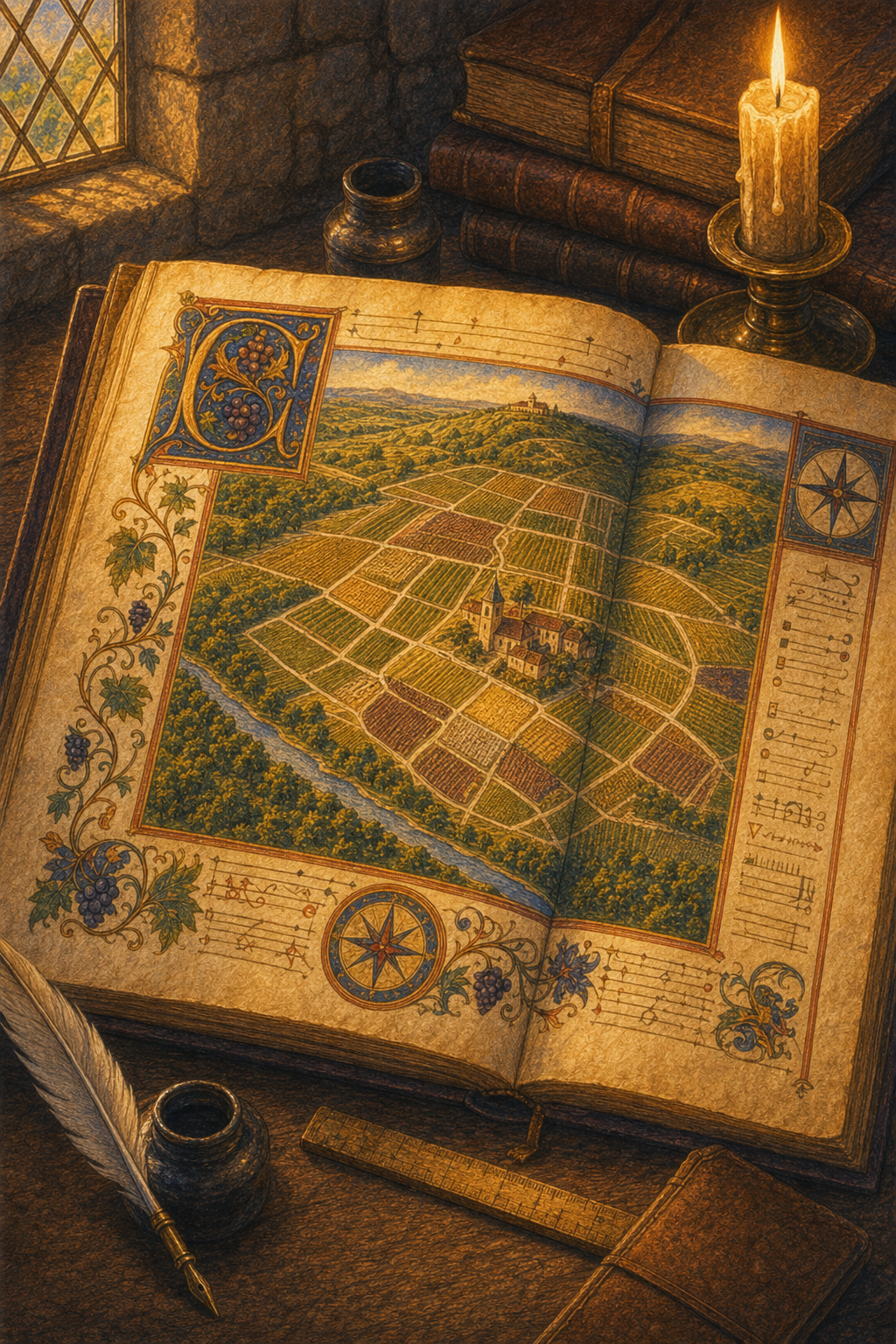

Celestial Crus
There are vineyards where the site does all the talking. Not the winemaker. The place.
Single-vineyard bottlings · Producers who learned when to get out of the way.

Single-vineyard bottlings are everywhere. Most of them are marketing—a way to charge more for a wine that comes from the same general area the winemaker always works in, with a parcel name added to justify the label. The genuine article is rarer than it looks.
The genuine article is a wine where the site so completely dominates that the winemaker’s job is to not get in the way. Grand Cru Burgundy from the handful of producers who still approach it that way. Single-vineyard German Riesling where the soil type is the entire argument—the difference between blue slate and red slate and grey slate is not theoretical, it’s in the glass. Northern Rhône Syrah from sites so steep that harvesting is genuinely dangerous and the wines justify every difficult decision. And, occasionally, the new-world equivalent: the isolated parcel in Sonoma, the high-altitude block in Mendoza, that produces something the region’s mainstream cannot touch.
Three bottles. Mystic energy throughout. The wines that belong here are the ones that feel like they’re communicating something just beyond what conventional description can reach. You open the bottle and something happens that you don’t entirely have words for. That’s the target. That’s always been the target.
What kinds of wines arrive in Celestial Crus?
Three single-vineyard bottlings where the site is the entire argument. Every pack explores a different cluster of places where the winemaker’s job was to not get in the way.
Village or Premier Cru Pinot
Not Grand Cru for the label. The producer matters more than the classification. The parcel that overdelivers relative to its official standing and asks nothing of you but attention.
Single-Vineyard Riesling
Slate-specific. The difference between the blue and the red and the grey is not theoretical—it’s in the glass, if you know what you’re tasting.
Site-Specific Wild Card
The third bottle is the discovery—a new-world parcel that earns single-vineyard status without the French classification system, or a lesser-known site making the case quietly.
Every season ships with a collectible card. Every card closes when the season does.
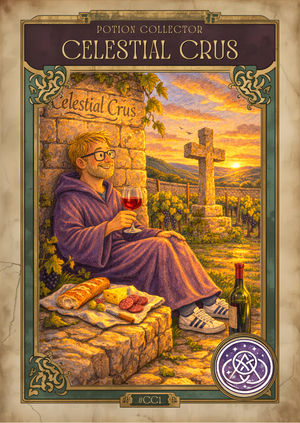
Each edition of Celestial Crus ships with a collectible card documenting that season’s curation—the bottles, the story, the moment. The card is available only to subscribers of that specific edition. When the season closes, that card is gone. Non-subscribers can purchase the wines when available, but do not receive the edition card and cannot acquire it afterward.
Lorekeeper subscribers who hold cards from every edition in a completed arc receive a bonus card—a commissioned illustration issued exclusively to those who were present for the whole thing. The set is the achievement.
What comes with the membership.
- Guaranteed slot in each quarterly edition while active
- Subscriber-exclusive card variant (unavailable to one-time buyers)
- Edition card per season — closes when the window closes
- Early access to flash offerings before public release
- Pause or cancel any time, between seasons
- Shipping included in all-in season price
The site speaks. The question is whether you listen.
Season I subscriber slots are forming now. The edition card from Season I will not be available after the window closes. Neither will the subscriber variant. The wines can theoretically be found elsewhere. The card cannot.