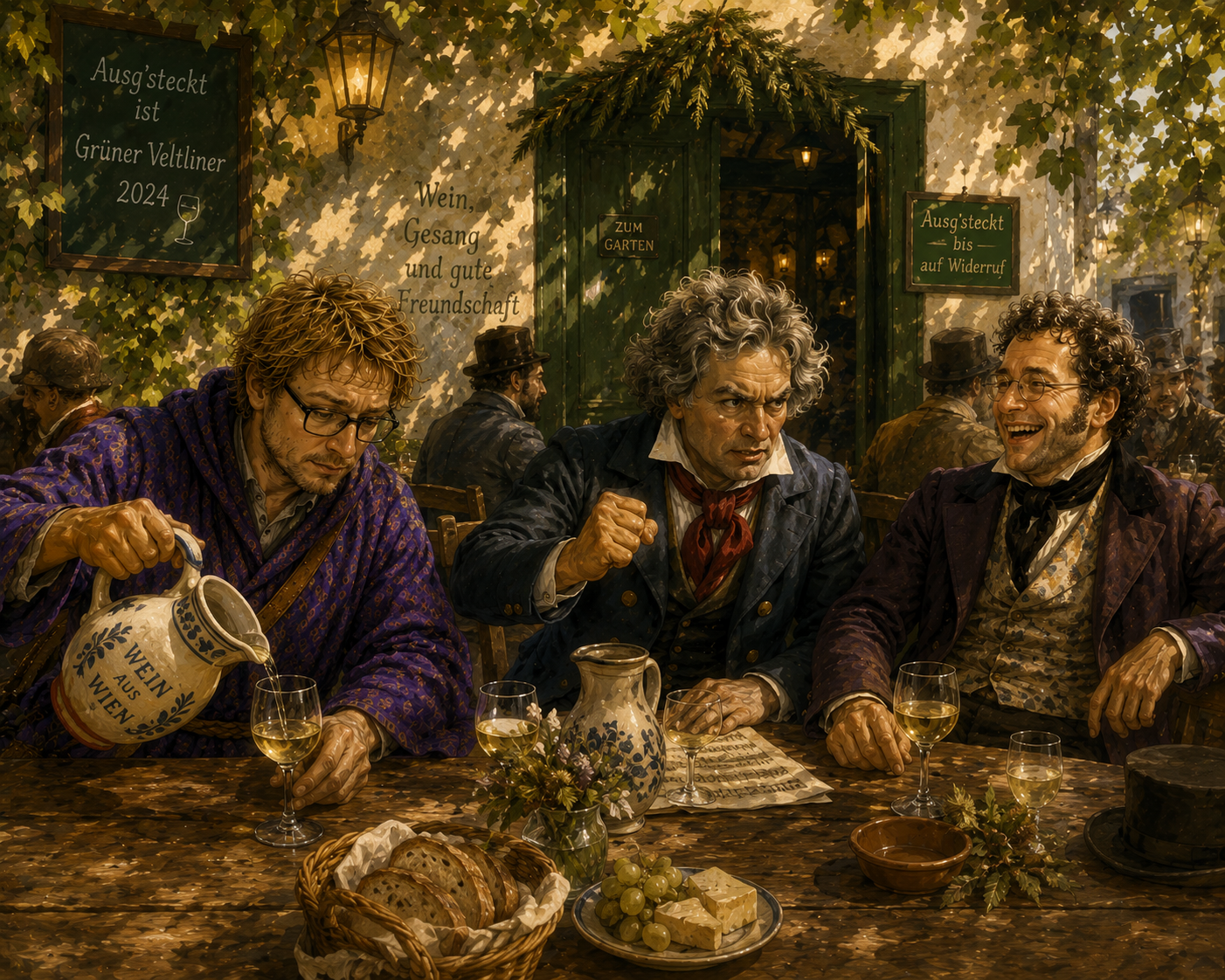

The Green Hour
The bottle you open before dinner says more about you than the one you open during.
The aperitif window · Six bottles for the hour before things get serious.

L’heure verte. The green hour. In nineteenth-century Paris it was the hour you drank absinthe before dinner—the transition between the working day and the social one. The bottle you opened at that threshold said something about how you wanted the evening to go. That moment still exists. Most wine clubs ignore it entirely.
The Green Hour is built around that threshold. Skin-contact whites that feel like afternoon light through amber glass. Early-drinking reds with enough chill tolerance to be opened before the first course. Field blends from growers who care more about what’s in the glass than which consulting winemaker signed off on it. Wines at the edge of conventional—not because unusual is interesting for its own sake, but because the best aperitif wines consistently come from people who made interesting decisions at the right moment.
Dawn energy means aromatic lift and awakening brightness. Garden energy means terroir-driven, growing-season depth. Six bottles, two energies. The honest caveat: some of these wines won’t survive the cellar. They’re built to be opened. Open them.
What kinds of wines arrive in The Green Hour?
Six bottles for the aperitif window. Skin-contact whites, early-drinking reds, field blends, pét-nats—wines built for the hour before things get serious. Every bottle is a creative statement.
Orange / Amber White
Extended skin maceration, amber color, textured. Opens the hour the way it should be opened—with something that makes you pay attention.
Mixed-Variety White
Planted together, harvested together, fermented together. The kind of wine that can’t be replicated because nobody planted it to be replicated.
Chill-Worthy Red
Gamay, Pineau d’Aunis, Trousseau, or something from the light-red fringes that rewards thirty minutes in the fridge and zero ceremony.
Pét-Nat or Méthode
Lightly fizzy, often cloudy, always opinionated. The aperitif format in its purest expression—no occasion required.
Dry Rosé
Not Provence for the sake of it. The rosé that earns its place by tasting like something specific—saline, mineral, worth arguing about.
Curator’s Wild Card
The sixth slot is deliberately opaque. Something that fits no category but clearly belongs at the aperitif hour. You’ll know when you open it.
Every season ships with a collectible card. Every card closes when the season does.
Each edition of The Green Hour ships with a collectible card documenting that season’s curation—the bottles, the story, the moment. The card is available only to subscribers of that specific edition. When the season closes, that card is gone. Non-subscribers can purchase the wines when available, but do not receive the edition card and cannot acquire it afterward.
Lorekeeper subscribers who hold cards from every edition in a completed arc receive a bonus card—a commissioned illustration issued exclusively to those who were present for the whole thing. The set is the achievement.

What comes with the membership.
- Guaranteed slot in each quarterly edition while active
- Subscriber-exclusive card variant (unavailable to one-time buyers)
- Edition card per season — closes when the window closes
- Early access to flash offerings before public release
- Pause or cancel any time, between seasons
- Shipping included in all-in season price
The hour before things get serious. Take it seriously.
Season I subscriber slots are forming now. The edition card from Season I will not be available after the window closes. Neither will the subscriber variant. The wines can theoretically be found elsewhere. The card cannot.